

How To Clean Sensor On Canon Rebel T5
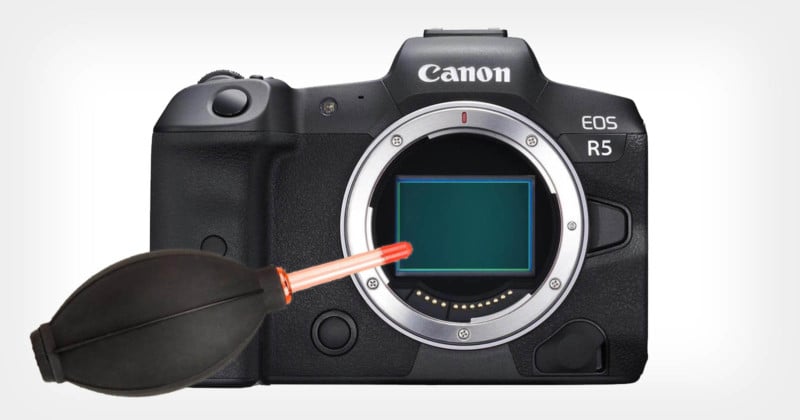
The thought of cleaning your photographic camera'southward sensor fills many photographers with dread. It may seem difficult or complicated but it is really much more straightforward than y'all may think. In this article, I will give you a simple guide on how to check for sensor grit and how to effectively clean your photographic camera's sensor.
Today I carried out one of the most daunting nevertheless important tasks when it comes to photography: I cleaned my camera's sensor myself. Whilst I had previously taken it to a camera store to accept it cleaned, thought it was of import to be able to exercise this myself. Subsequently researching numerous sources on the correct mode to do this, I decided to write one comprehensive guide on how to do it properly, effectively, and (most importantly) safely!
Apologies for the disclaimer but this is just a guide to best practices. You should take extreme care in conveying out this task as information technology is very piece of cake to damage your sensor rendering your camera in need of vital and expensive repairs.

Table of Contents
What Is Sensor Dust and What Does It Look Like?
Every time yous alter a lens on your camera, you are exposing the inside to potential grit and dirt contaminants.
Yous should try to protect the inside of your photographic camera every bit much as possible when changing lenses—it goes without saying that you lot should not change a lens in an surroundings that will lead to unnecessary clay entering your camera, such as a sandy beach or on a windy day—but obviously information technology is not always possible to do this. Inevitably, clay and dust will enter the camera and ultimately evidence up in your images.
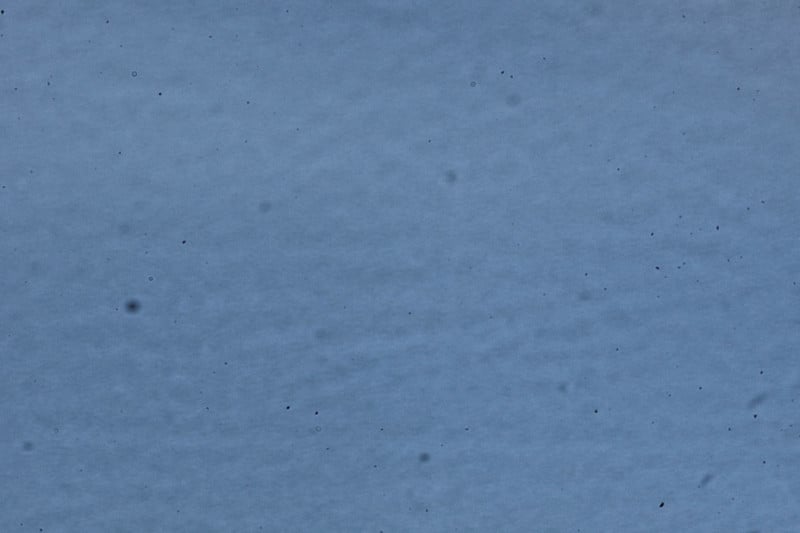
Sensor dust will show up in your images as blurry spots which will expect something like the spots circled beneath:


In that location are a few important things to note:
- You may see dust in your viewfinder but this dust volition not prove upwards on your images themselves.
- It is worth pointing out that you may not see whatever sensor dust if y'all shoot at wide apertures (such every bit f/two.8) equally the depth of field is wide enough to throw these spots out of focus rendering them very hard to run across (if you can meet them at all).
- Yous can tell that it is grit or dirt on your sensor when you see the same spots actualization on multiple images in the aforementioned places.
- Although a highly detailed scene may hide the grit, it is still at that place and will naturally get visible the adjacent fourth dimension you take a photograph.
- You may encounter dust on the mirror (if you use a DSLR), but this won't exist recorded on an image and should exist removed using an air blower. DO NOT use compressed air equally this is too powerful and may harm your photographic camera.
- Practice Not bear upon the mirror (or the sensor) with Annihilation as both are extremely fragile and easily damaged, scratched, or marked.
How to Test to See Sensor Dust
- A uncomplicated way to check and see if you take sensor dust is to prepare your camera to a small aperture such equally f/16 or f/22.
- You should likewise set your camera to the lowest ISO as you lot are not worried almost noise at this stage.
- Take a photograph against something vivid white (such equally a white wall, piece of paper, or cloudy sky) and gently motion the camera slightly as y'all accept the photo to help blur the photo and make the dust more visible.
- Then to bank check for dust, either inspect the dorsum LCD screen at 100% or load the paradigm into your computer to make this job a little easier.
- If you meet signs of grit (as described and shown to a higher place) so you know you demand to clean the sensor.
Before You Attempt to Make clean Your Sensor
I would suggest that you first effort to use your camera'due south motorcar-clean mode if information technology has i to see if this makes a departure in removing dust or clay. Some cameras do this automatically when turned on or off but information technology is worth trying first.
Important: Brand sure that your camera's battery is fully charged every bit information technology may turn off mid-clean and impairment the sensor if information technology runs out of power.
Things Yous Volition Need
- Cleaning swabs that are lint-free and designed for your camera'south specific sensor size.
- Cleaning solution designed for camera sensors.
- Seedling blower for manually puffing dust away with air.
- Flashlight or headlamp to meet within the camera and inspect the body.
- Sensor loupe, a keen cheap item that is a magnifier with LED lights allowing yous to clearly and hands see the sensor and inspect for grit and dirt.
How to Dry Clean Your Sensor
- Observe an area that is every bit gratis of grit and air current as possible.
- If you are using a DSLR: With a full battery and no lens on your camera, look for the bill of fare option to manually clean your camera. Cheque your manual if yous can't discover this option. When you select this style, y'all volition hear the mirror lock back and reveal the sensor if you lot are using a DSLR. Note that you lot just need to power off your camera to release the mirror back to its usual place in front end of the camera.
- If you are using a mirrorless camera: Your sensor should be exposed when you lot take off your lens or body cap.
- Property the camera upside down then the LCD screen is facing the ceiling, use the transmission air blower to blow air into the camera onto the sensor. Be extremely conscientious NOT to affect the sensor with the tip of the blower. The best practise is not to put the tip of the blower inside the camera at all. Again do not use compressed air.
- After a few blasts of air, turn off the camera and replace the lens. Yous should take another exam shot (as higher up) to see if this has removed the dust or clay that was on the sensor. If it has then there is no need to take any further steps. If it remains, and then you will likely need to proceed to a 'moisture' clean of the sensor.
How to Wet Clean Your Sensor
- Remove the lens and place the camera on a surface with the LCD facing the floor.
- Select the manual cleaning option to lock up the mirror on a DSLR. Remove the lens or body cap to betrayal the sensor on a mirrorless camera.
- Remove a sensor swab and using the air blower a few times, blow air to remove any odd pieces of lint that may be stuck to the swab.
- Add 2 (or three drops max) of the solution to the tip of the swab. Do not oversaturate the swab or y'all will get out streaks on the sensor. Less is definitely more in this case!
- With great intendance place the swab onto 1 side of the sensor and with non besides much force, gently move the swab across the sensor in one smooth motion. When you lot become to the other side, turn the swab over and repeat the process starting from the far side back to where you started. Again, do this in i smoothen move with no great force.
- At this stage, I use a loupe and audit the sensor to see if I can run across if the dust has been removed. If you are not sure, turn off the camera and replace the lens and take a farther test shot to audit for grit.
- If yous see some grit remains and so you will need to repeat the process but it is important to use another clean new swab. Do not reuse a swab.
If you see streaks on the sensor so this means that you accept used as well much solution. Wait a few minutes and then repeat the process with less solution. Ii drops are usually enough.
You volition now have a make clean sensor. When done properly with the correct equipment it is quite a simple process to clean the camera's sensor. Although a little daunting the first fourth dimension you do this, you will be saving yourself the unnecessary expense and inconvenience of being without your camera by using a professional cleaning service.
I hope this tutorial helps to explain how to clean your sensor in a straightforward way.
Nearly the author: Antony Zacharias is a Florida-based Commercial and Fine Art lensman with roots in London. To see more of his work, head over to his website or give him a follow on Facebook, 500px, and Instagram.

Source: https://petapixel.com/how-to-clean-camera-sensor/
Posted by: westendorfwhosto.blogspot.com
0 Response to "How To Clean Sensor On Canon Rebel T5"
Post a Comment